
Whether you’re in the thick of winter or preparing for the coming cold, we’re glad you found this guide. Outdoor furniture is such a wonderful part of our homes and we want to help you find ways to make it last a lifetime. In this breakdown, we’ll help you understand when it’s time to store or cover your furniture, what furniture materials handle winter weather, and how to be better prepared for the next year.
When to “Winterize” Your Furniture

No matter what methods you take to protect your furniture, there’s always one sign it’s time to prep for winter: the first frost.
While this isn’t a problem for most southern states, the northern and midwestern states are all too familiar with the chills of late fall. The first frost can come sneakily and quickly, and once it shows up, the first snow is bound to follow close behind. These shifting temperatures and moisture levels can have a harrowing effect on outdoor furniture if it’s not properly prepared for the winter season.
Why Preparing Your Furniture for Winter Matters
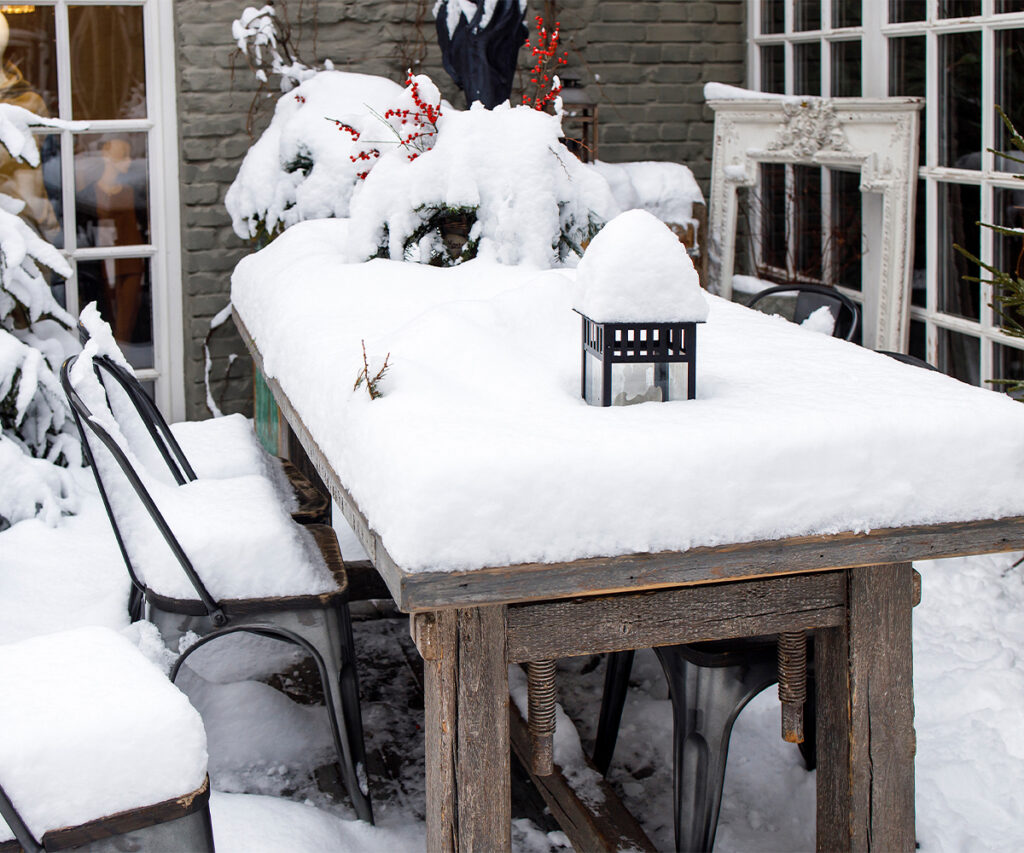
The most common side effects of leaving your furniture out all winter include:
- Rust (applies to fasteners, hardware, and most metal components)
- Warping
- Cracking
- Mildew
- Mold
- Shrinkage
- Staining
- Chipping
By winterizing your furniture, you increase the lifespan and appearance of your outdoor furniture. However, you may not need to winterize your furniture if you’ve purchased a piece of furniture made for harsher weather conditions.
What are Types of Weather-Proofed Outdoor Furniture
If you’re looking for winter-ready furniture, the most popular type is poly furniture. Poly, or HDPE (high density poly ethylene), is made from recycled plastics and makes for a durable material that holds up in even some of the toughest weather conditions. This means our outdoor furniture is designed to withstand the varying Tennessee weather.
The pigment in poly is integrated into the plastics so it won’t chip, fade, or peel like a paint or even stain. Most poly furniture makers also invest in fasteners and hardware that is as hardy against fluctuating climates. This means there is no risk of rust. Plus, the recycled plastics creates a non-porous environment to prevent mold and mildew.
Covering vs. Storing
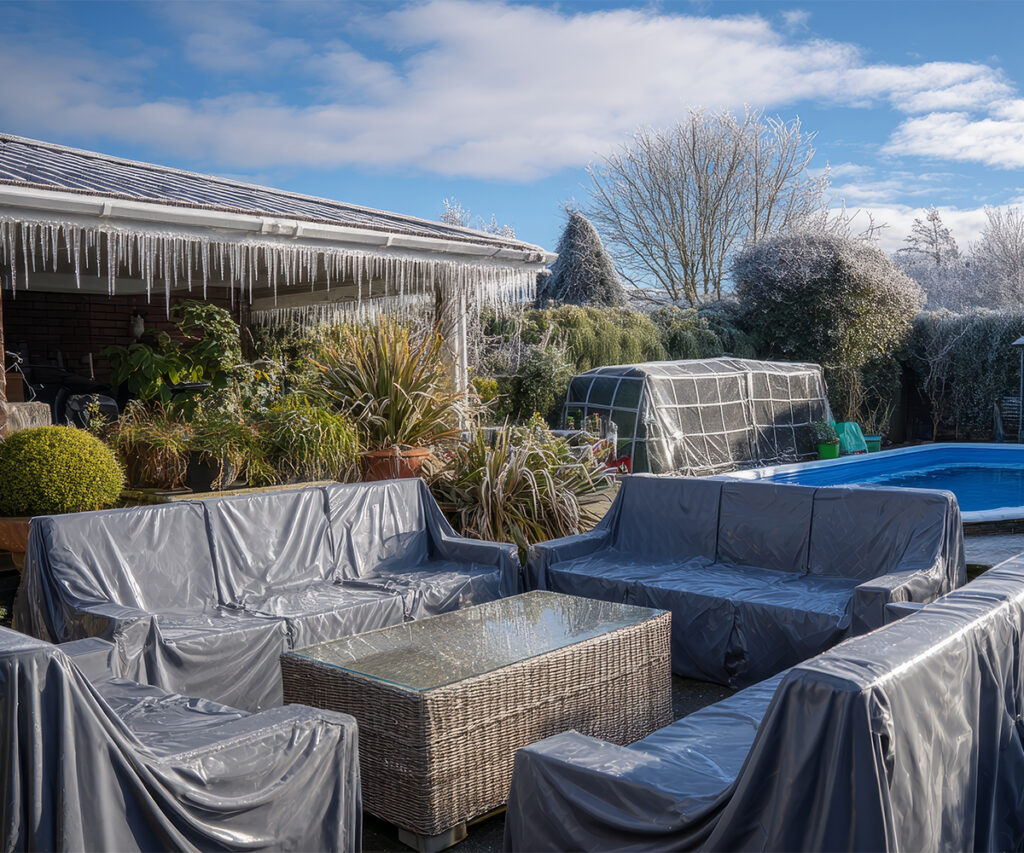
No matter whether you own wood, poly, or metal outdoor furniture – it’s important to know if a cover or storage is sufficient protection. Let’s break down what each furniture material needs in order to survive a full winter season.
Wood Furniture
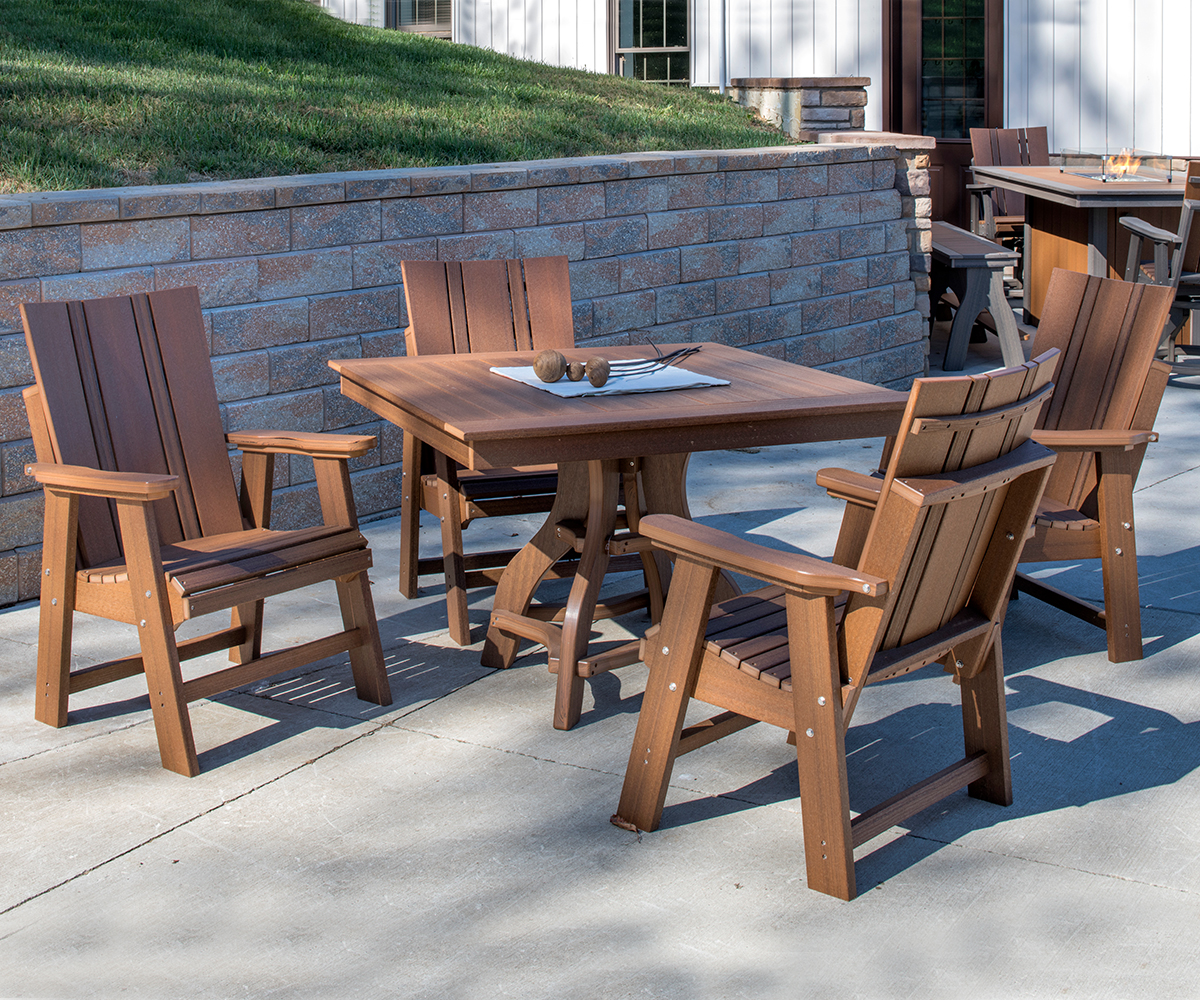
Store wood furniture during snowy, wet winter months, though some manufacturers offer hardier woods that can handle winter with less protection. (These options tend to be quite expensive in comparison.) A furniture cover alone can’t stop fluctuating temperatures and humidity, and those swings can warp or crack the wood without a single snowflake touching it. Store wood furniture in a climate-controlled environment. If this option is not possible, try to find a well-sealed basement or shed and cover the furniture while it’s in storage to protect it from dust or other
Metal Furniture
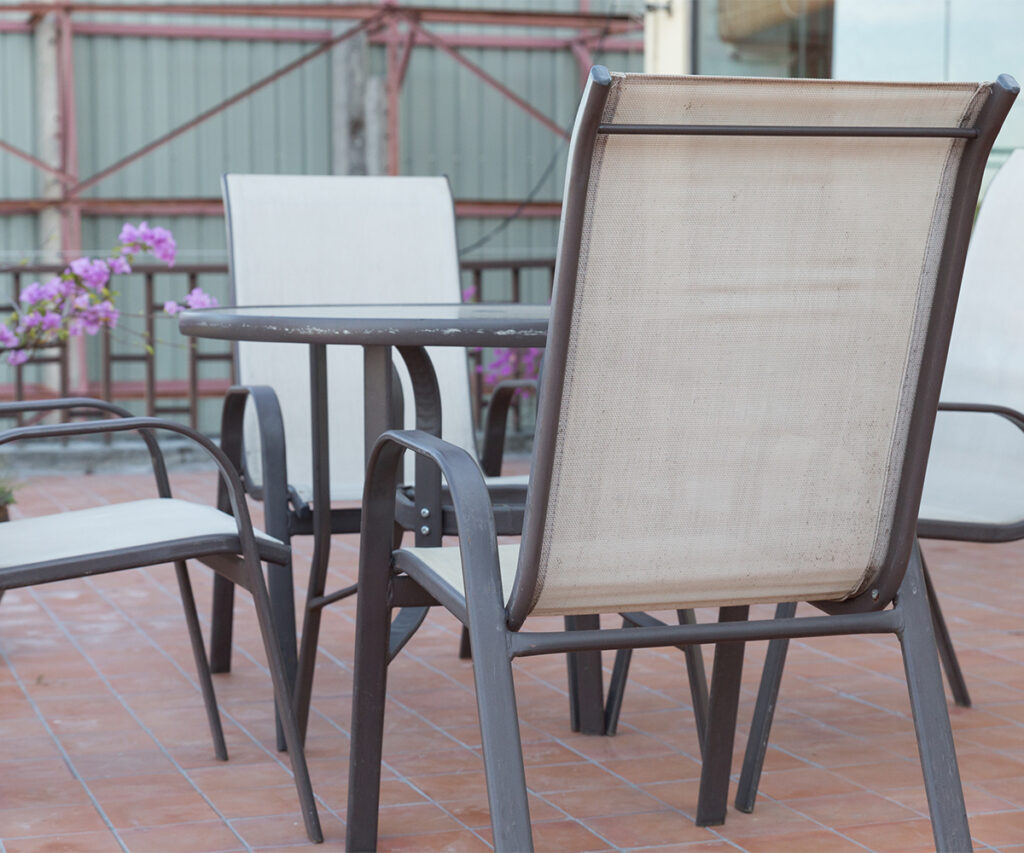
Store most metal furniture in a garage or shed during the winter to protect it. This is a precaution to prevent pesky rust that not only ruins the look of your furniture, but can also cause chipping and overall erosion.
However, if you own furniture made of rust-proof metals, you may feel comfortable leaving outside covered or uncovered. We recommend following manufacture care instructions for optimal results. These metals lead the market as the best rust-proof options:
- Galvanized steel
- Stainless steel
- Aluminum (This option is lightweight and often requires something to stabilize it during windy conditions)
Poly Furniture
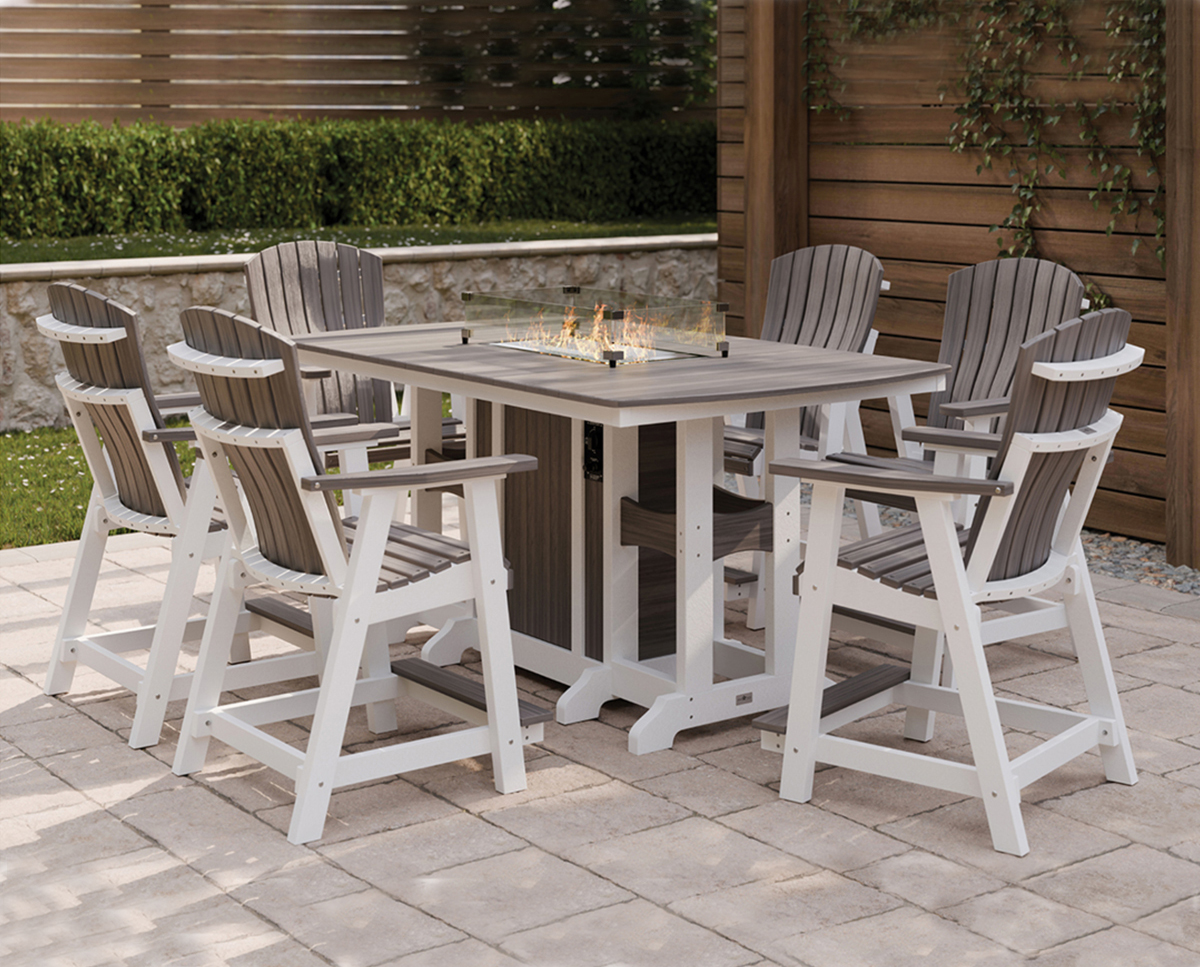
As we mentioned earlier, poly furniture is able to withstand the winter conditions. It’s a heavy material that handles moisture and cold well. While there’s no major risks to leaving your poly furniture out all year, some homeowners choose to cover their poly furniture for easier cleanup and prevention of icicle formations.
Removing Upholstery
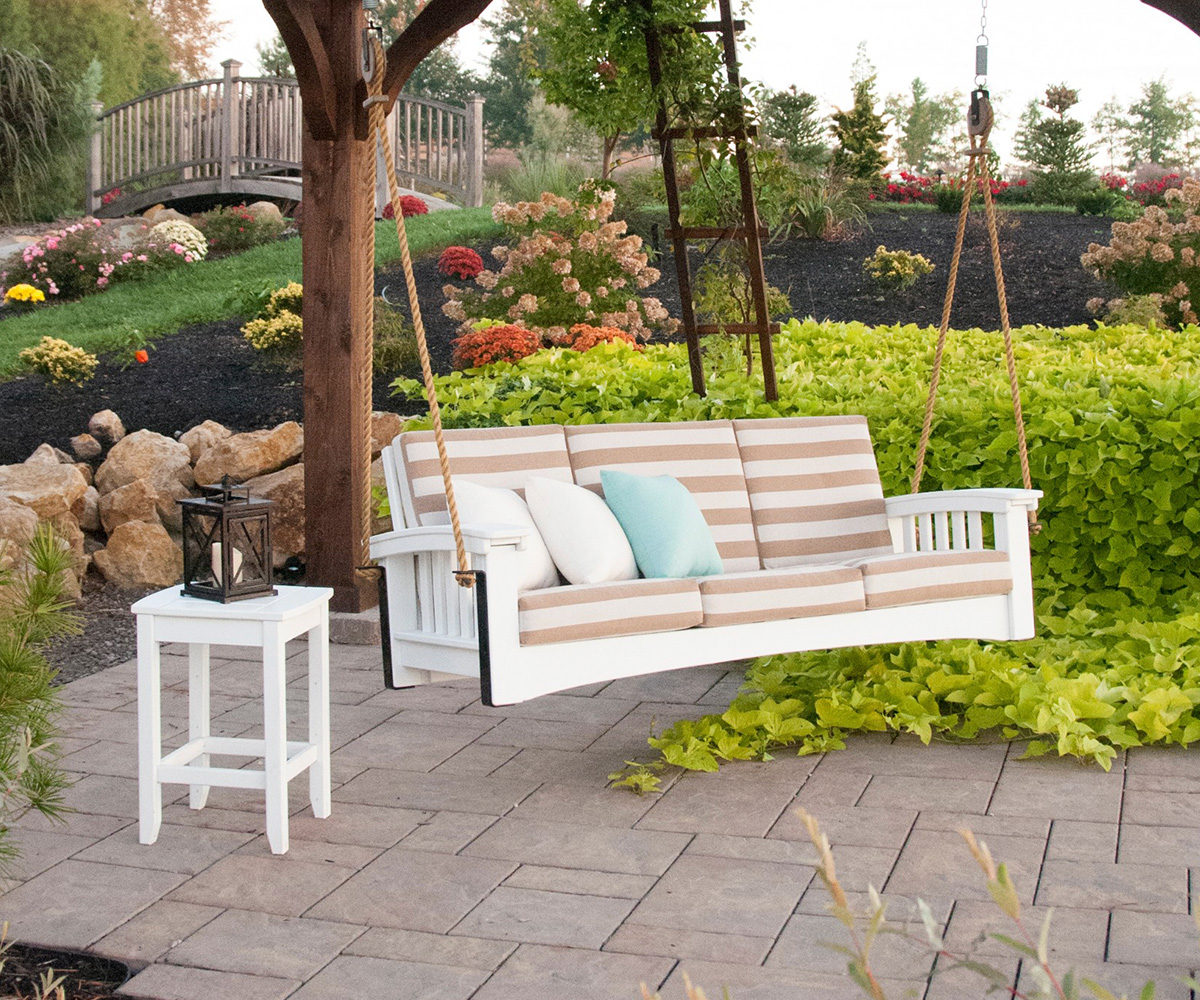
Remove your upholstery during the winter months, no matter what material it’s made of. Typically this part of the furniture is easy to store in bags or boxes in your garage, closet, or basement so it’s not in the way.
Storing your upholstery keeps it not only looking fresh, but smelling good as well. The last thing you want happening to your cushions is discoloration, wear, or mold! Check the tags on your upholstery so you know how to wash and dry it before you bring it back outside for the summer.
Find Furniture Ready for the Tennessee Weather

We invite you to check out our selection of deck chairs, patio tables, rope swings, and more on this website or at our Greenville, Tennessee showroom. Every piece is built with comfort, beauty, and longevity in mind. You’ll never need another piece of backyard or patio furniture when you switch to handcrafted poly.